

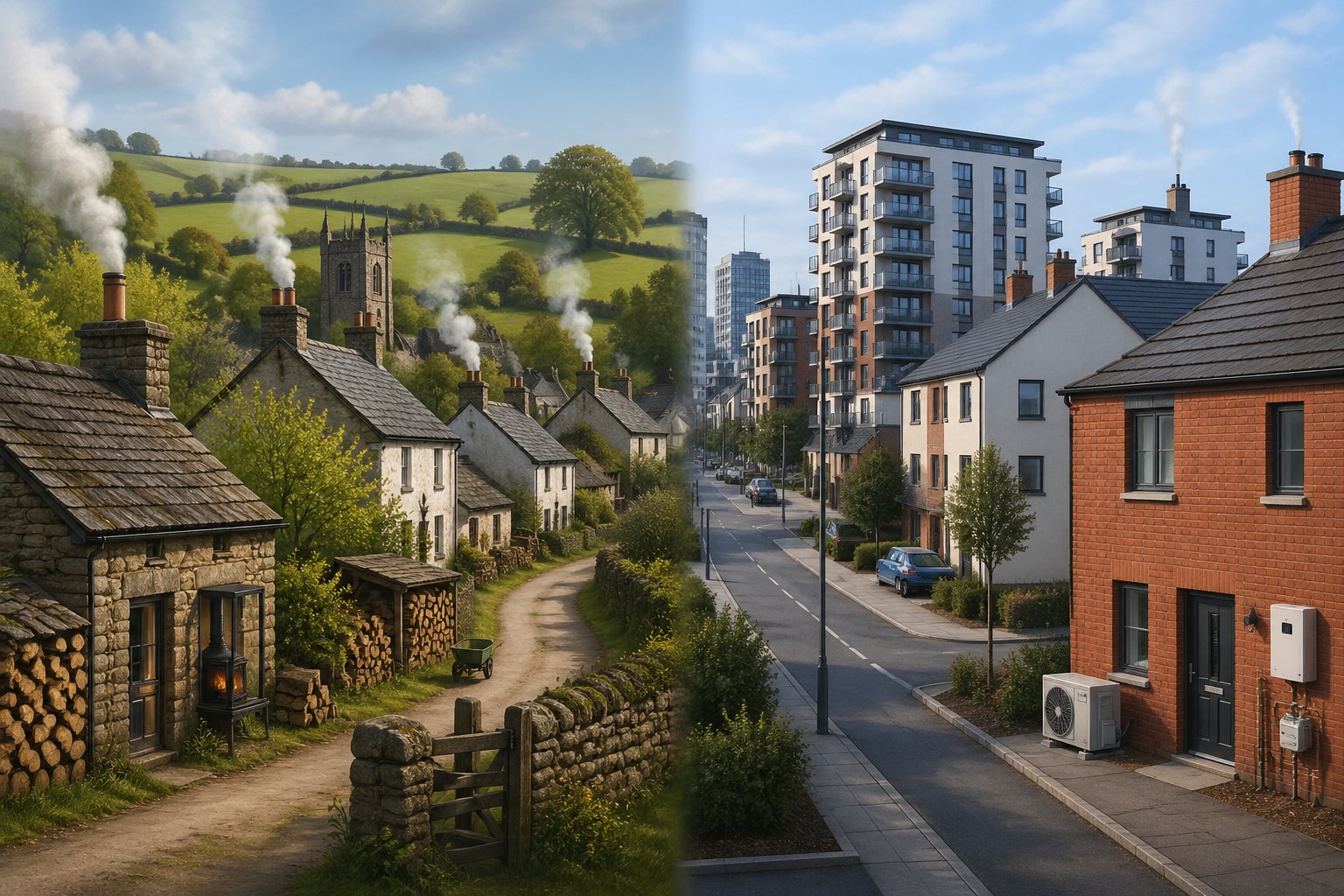
Uptake of Solid Fuel for Home Heating: Rural vs Urban UK
Heating choices really do diverge between rural and urban homes in the United Kingdom, with solid fuel use much more common in countryside properties. Rural areas – of which, being based in Worcestershire we serve many – see substantially higher solid fuel uptake for heating, with 11% of off-grid homes using solid fuel compared to minimal usage in urban areas that have access to mains gas. This difference mostly comes down to limited infrastructure in rural spots—about 1.4 million properties aren’t even connected to the gas grid.
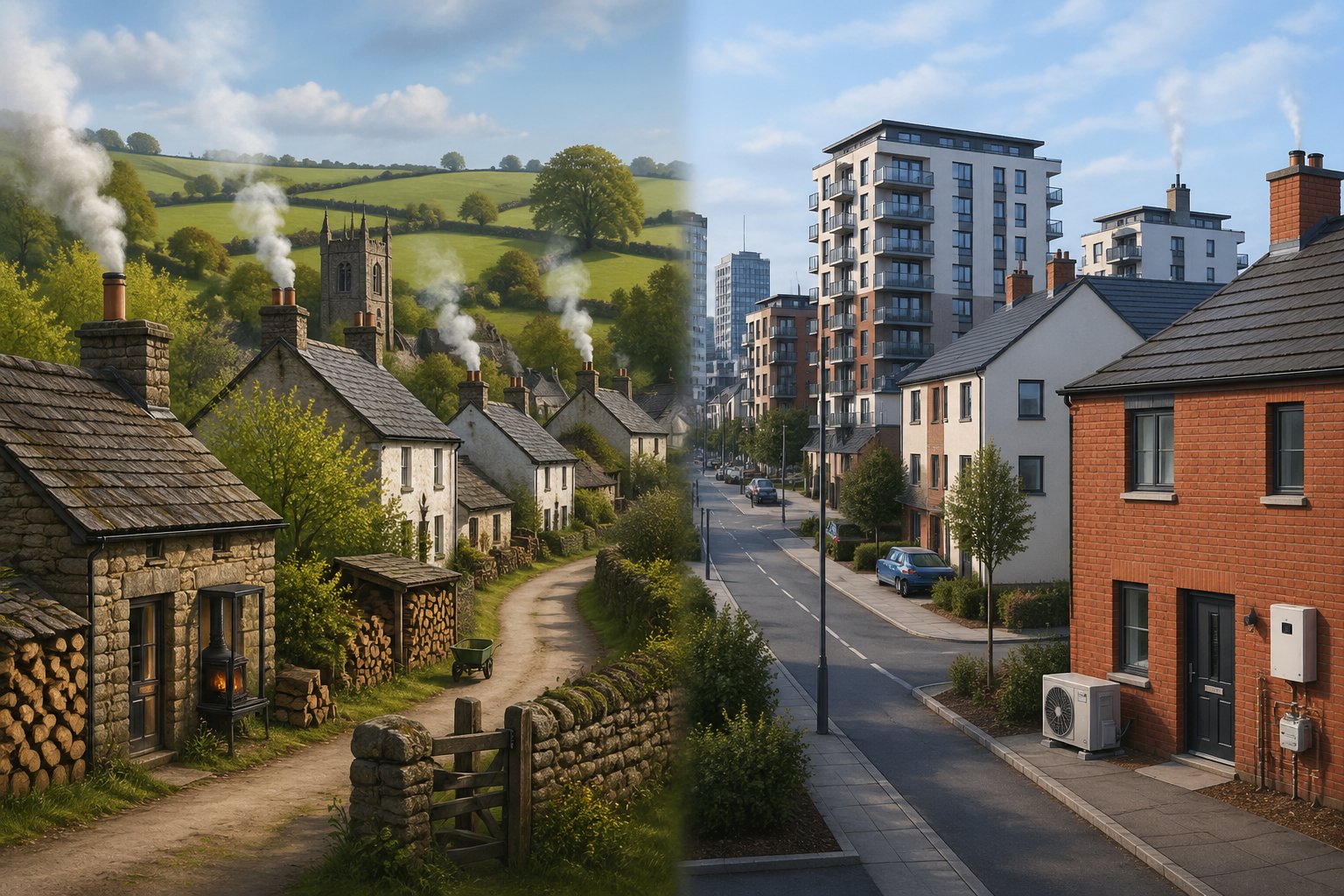
The gap in solid fuel usage mirrors broader energy access patterns across the UK. Urban homes mostly tap into mains gas, which covers around 74% of all households in England and Wales. Meanwhile, rural properties often have to rely on heating oil, electricity, solid fuel, or LPG because they’re off-grid. About one in four rural homes has to find something other than mains gas—which, let’s be honest, can mean steeper energy bills and a different environmental footprint.
Why do rural homes lean on solid fuel so much more? It’s partly about geography—connecting to the gas grid just isn’t practical (or possible) in many countryside areas. Plus, a lot of rural houses are older and were built for solid fuel or oil, so people stick with what works. Economics, local supply, and property quirks all play their part too.
Key Takeaways
- Solid fuel usage is significantly higher in rural UK homes at 11% of off-grid properties compared to minimal usage in urban areas with gas access
- Rural areas face energy challenges due to 1.4 million properties lacking mains gas connection, resulting in dependence on alternative heating fuels
- Off-grid homes experience higher energy bills and fuel poverty risks whilst the UK government works towards phasing out high-carbon heating options
Comparative Uptake of Solid Fuel Heating: Rural and Urban Areas
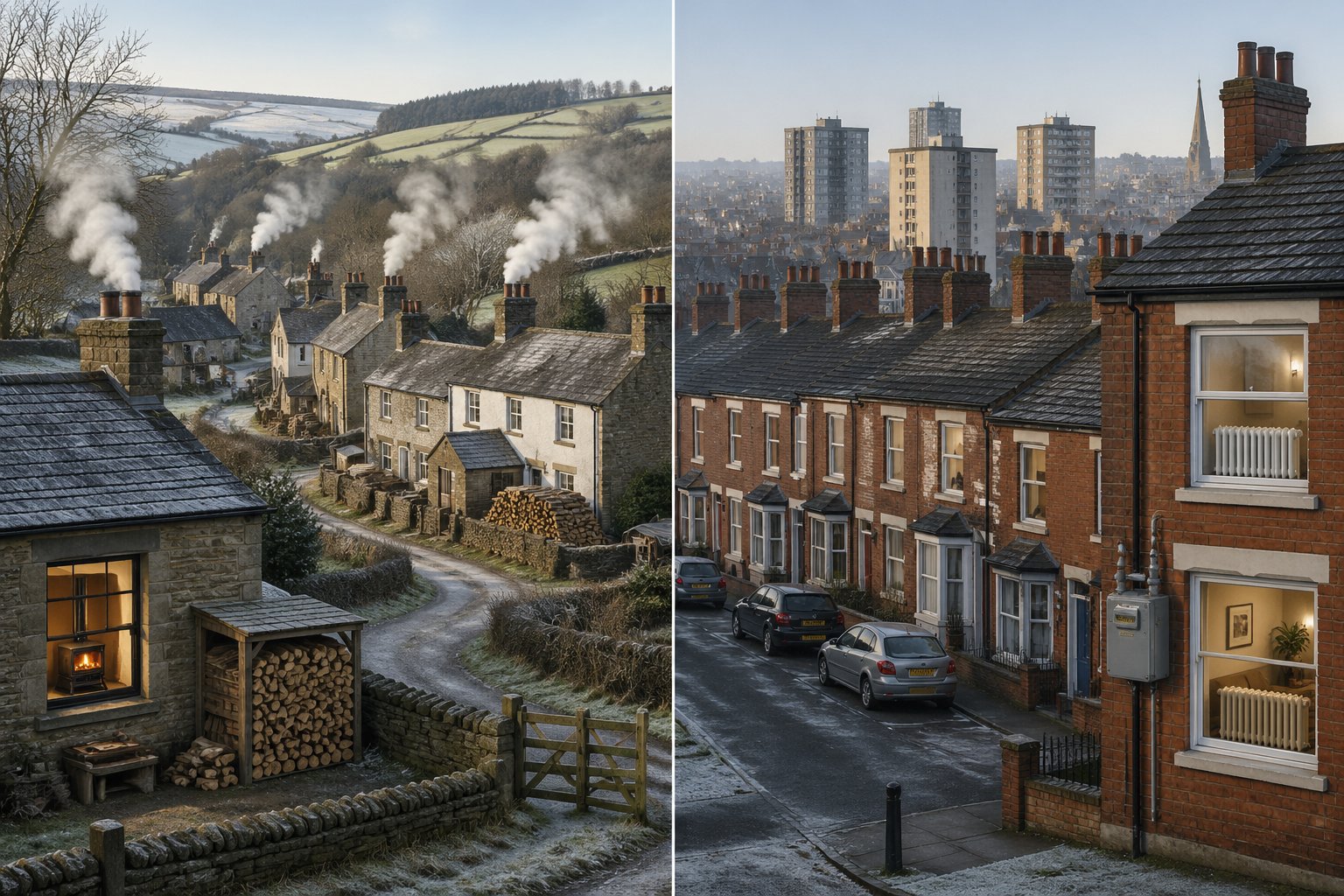
Solid fuel heating shows pretty clear-cut usage patterns between rural and urban areas in the UK. Rural households tend to stick with these traditional fuels at much higher rates, mostly because access to mains gas just isn’t there.
Latest Statistics on Solid Fuel Use
Off-grid homes in the UK use solid fuel for about 11% of their heating needs. That’s a decent chunk of the roughly 2 million households off the gas grid nationwide.
Rural areas have much higher solid fuel usage than urban ones. A lot of the housing in these regions predates modern heating infrastructure—over 75% of UK homes were built before 1980, and more than 60% before the first thermal regulations hit in 1970.
Urban areas, on the other hand, barely use solid fuel except in a few niche cases. Flats and modern social housing sometimes go with electric systems, but you just don’t see much solid fuel in cities. The main reason? Urban homes usually have easy, affordable access to mains gas.
Energy bills and worries about fuel poverty have nudged some households towards solid fuel as a cheaper alternative to gas-based central heating. That said, this switch can spark concerns about air quality and local pollution in certain spots.
Geographic Distribution of Off-Grid Households
Off-grid homes cluster heavily in rural regions across England, Scotland, Wales, and Northern Ireland. These properties don’t have a connection to the national gas network and have to rely on whatever other fuels are available.
The main heating fuel mix varies a lot by region. Rural off-grid households typically go for heating oil (55%), electricity (18%), solid fuel (11%), and LPG (10%). Older properties in England especially tend to stick with oil and solid fuel.
Most of the homes using solid fuel for heating are tucked away in England’s rural areas. These places are just too remote for gas grid expansion to make financial sense. Plus, the age and construction of rural housing stock nudges people toward fuels like coal and wood.
Trends in Heating Choices by Region
Regional trends matter. Rural households are dealing with different constraints and opportunities than their urban counterparts when it comes to picking a heating system.
The government’s Clean Growth Strategy is pushing to phase out high-carbon fossil fuel heating during the 2020s. That’s going to hit rural off-grid homes hardest, especially those still using oil and coal. Energy efficiency upgrades and options like heat pumps are out there, but take-up depends on where you are and what kind of house you have.
Census 2021 data gives a snapshot of how homes in England and Wales heat up—breaking it down by gas, electric, oil, solid fuel, and renewables. These details make it easier to spot where solid fuel is still common and where targeted support for upgrades might really help.
Factors Influencing Fuel Choice in Rural and Urban Homes
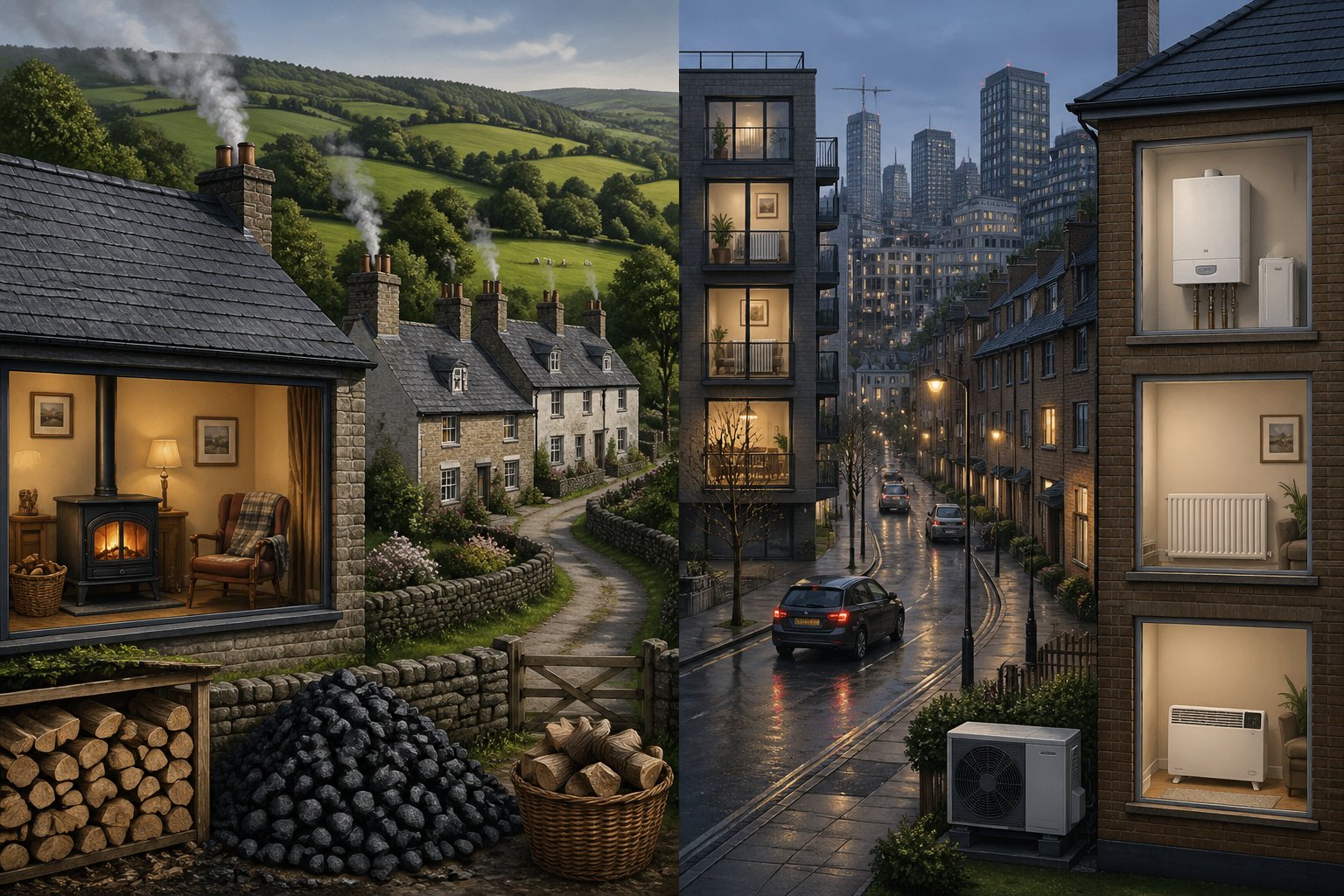
Rural homes face a very different set of constraints than urban properties when it comes to heating. Building age, fuel costs, and what’s actually available all shape what’s realistic for people to use.
Age and Condition of Housing Stock
Rural homes in the UK are usually older than their urban counterparts. Over 75% of UK homes were built before 1980, but rural areas have an even bigger share of pre-1970 properties—built before thermal regulations were a thing. These buildings often lack proper insulation and aren’t set up for modern heating systems.
Many older rural properties were designed with solid fuel in mind. Chimneys, fireplaces, storage for coal or wood—it’s all there. Switching to something else can mean expensive upgrades, which plenty of households just can’t swing.
The structure of these buildings also hits efficiency. Rural homes average a fuel poverty energy efficiency rating of 64, compared to the national average of 70. That means rural households need more fuel to keep warm, no matter what they’re burning.
Fuel Prices and Volatility
Energy bills can swing wildly depending on where you live and what you use. Off-grid households almost always pay more for heating because alternatives like oil, LPG, and solid fuel often cost more per unit of heat.
As energy prices have climbed, some folks have turned to solid fuel as a cheaper alternative to gas-based central heating. If you can source local wood or coal, the upfront cost can be lower. But prices for all fuels go up and down with the market, and supply chains aren’t always predictable.
Rural households are especially exposed to these price swings—they don’t have many alternatives. If heating oil prices shoot up, switching to something else isn’t easy without a big investment.
Access to Mains Gas and Alternatives
Being off-grid pretty much dictates your fuel choices if you’re rural. About 55% of off-grid homes use heating oil, 18% use electricity, 11% use solid fuel, and 10% use LPG. Urban homes, by contrast, are mostly on mains gas.
The lack of gas grid infrastructure in rural areas is down to low population density. Running gas pipes out to scattered homes just isn’t cost-effective for energy companies. So, rural residents have to rely on delivered fuels or whatever solid fuel they can get locally.
Geography throws up more barriers. Some really remote homes struggle with regular deliveries of heating oil or LPG, making solid fuel a more dependable—if imperfect—choice.
Socioeconomic and Geographic Drivers of Solid Fuel Dependence
Rural households deal with unique economic pressures and infrastructure gaps that keep solid fuel use higher than in urban areas. In Scotland, for example, lower-income rural homes often spend more on energy than their urban counterparts—sometimes even more than wealthier households in the same rural region.
Rural Fuel Poverty and Energy Affordability
Fuel poverty bites harder in rural communities thanks to a mix of higher energy costs and lower average incomes. Rural households frequently pay premium prices for heating fuels while earning less, creating a tough squeeze that makes solid fuels look appealing.
The cost gap is especially stark for off-grid homes without access to mains gas. These properties rely on pricier alternatives like heating oil or electricity, which can cost a lot more per unit of heat than gas-based central heating. When bills rise, many rural residents switch to solid fuels—coal, wood, peat—to save money.
Economic inequality shapes fuel choices, too. Lower-income rural households often can’t afford energy efficiency improvements or modern heating systems, so they’re stuck with cheaper, less efficient solid fuel options.
Infrastructure Barriers and Off-Grid Challenges
No gas grid connection is the biggest infrastructure barrier for rural homes. About 2 million UK homes are off the gas network, mostly in rural areas.
These off-grid properties have limited heating options:
- Heating oil (expensive and price-volatile)
- Electricity (costly for heating large spaces)
- LPG (requires storage and regular deliveries)
- Solid fuels (cheaper but labour-intensive)
Geographic isolation just makes things trickier. Regular fuel deliveries aren’t always possible, so people turn to locally available wood or coal. Extending the gas network out to remote properties is so expensive it’s rarely considered, leaving many communities off-grid for good.
Impacts on Thermal Comfort and Health
Solid fuel dependence impacts how comfortable rural homes actually feel. These systems tend to heat spaces unevenly, so you get cold spots and temperature swings throughout the house.
Health worries come up, too. Homes that rely on solid fuels often can’t keep consistently warm in winter, especially if the building is old and leaky. People sometimes cut back on fuel to save money, which means living spaces don’t get warm enough.
Indoor air quality takes a hit when solid fuels are burned inefficiently or homes aren’t ventilated well. The mix of fuel poverty and solid fuel use is a real health risk—kids, elderly residents, and anyone with breathing issues are especially vulnerable.
Environmental Impacts and Air Quality Concerns
Burning solid fuels at home brings some big environmental and health challenges—think greenhouse gas emissions and particulate pollution. These impacts show up differently in rural and urban areas, but both have to be part of the UK’s climate conversation.
Greenhouse Gas Emissions from Rural Heating
Rural homes that rely on solid fuels contribute substantial greenhouse gas emissions compared to properties connected to mains gas. Wood burning releases carbon dioxide during combustion, though it’s often described as carbon neutral if sourced sustainably. Coal, on the other hand, produces much higher emissions per unit of heat—making it one of the least climate-friendly heating choices out there.
The UK’s off-grid rural properties face some tough obstacles in cutting their carbon footprint. Many don’t have access to natural gas infrastructure and end up using heating oil or solid fuels instead. House coal and manufactured solid fuels generate more emissions than newer options like heat pumps or well-managed biomass boilers.
Rural heating patterns make decarbonising heat across the UK a real challenge. The government has said it will phase out high-carbon fossil fuels in off-grid homes, but finding alternatives that work in isolated places with patchy infrastructure isn’t straightforward.
PM2.5 Emissions and Air Quality Issues
Domestic burning of wood and coal is responsible for about 38% of the UK’s primary particulate matter emissions. To put that in perspective, industrial combustion contributes 16% and road transport 12%. PM2.5 particles are tiny—they can get deep into your lungs and even enter the bloodstream, raising serious health risks.
Traditional house coal puts out more PM2.5 than smokeless fuels. Burning wet wood is even worse; it creates more than twice the emissions of seasoned or kiln-dried wood because of incomplete combustion. One London study found wood burning makes up as much as 31% of urban PM2.5, showing that domestic burning can really affect city air, even if it’s more common in rural areas.
The tiny particles in smoke can trigger asthma attacks and make breathing problems worse. Over time, exposure increases the risk of cardiovascular disease and other chronic health issues.
Solid Fuel in the Context of Net Zero Targets
The UK has set a goal to cut particulate matter emissions by 46% by 2030. Burning solid fuels at home is at odds with these goals and the broader net zero commitment for 2050. Decarbonising heat means moving away from high-emission fuels, plain and simple.
The government’s Clean Air Strategy plans to ban sales of the most polluting fuels, including traditional house coal, and to limit wet wood sales to small amounts. Only the cleanest stoves have been allowed on the market since 2022.
Rural communities have their own set of challenges in meeting net zero. With limited access to the gas grid, switching to low-carbon heating systems like heat pumps or district heating takes more investment and planning. The move away from solid fuels has to balance environmental goals with the actual heating needs of people living far from urban centres.
Policy Responses and Decarbonisation Strategies
The UK government has rolled out policies to cut carbon emissions from heating, paying close attention to homes not on the mains gas grid. These strategies aim to phase out fossil fuels while helping rural households through targeted funding and industry partnerships.
Heat and Buildings Strategy Overview
The Heat and Buildings Strategy lays out the government’s plan to lower emissions from roughly 30 million UK homes and workplaces. Heating buildings makes up almost a quarter of the UK’s total emissions.
The strategy is projected to support up to 240,000 skilled green jobs by 2035. It builds on previous commitments like the Energy White Paper and the Prime Minister’s 10 Point Plan.
The main push is for a gradual move away from fossil fuel heating. For homes off the gas grid, that means shifting from oil and solid fuel boilers to low-carbon alternatives such as heat pumps.
The Department for Energy Security and Net Zero (DESNZ) leads this work. The strategy sets a general direction for the 2020s and signals how the UK intends to hit net zero by 2050.
Boiler Upgrade Scheme and Rural Uplift
The Boiler Upgrade Scheme offers grants to help people install low-carbon heating. The standard grant is £7,500 for air source and ground source heat pumps.
There’s an extra uplift for rural homes, recognising the higher installation costs and the fact that these properties often rely on pricier fossil fuels like oil or coal.
Heat pumps aren’t always a quick sell. High upfront costs, policy uncertainty, and limited consumer awareness all slow progress—especially in rural areas where solid fuel is still common.
Role of DESNZ and Industry Stakeholders
DESNZ works with industry groups to support the energy transition. For example, Liquid Gas UK represents off-grid heating suppliers and helps shape policies for rural homes.
The UK Industrial Decarbonisation Alliance (UKIFDA) partners with government to help meet decarbonisation targets. Industry feedback gives policymakers insight into the real-world barriers to replacing solid fuel heating.
Decarbonising off-grid homes takes targeted effort. These properties can’t just switch to mains gas, so policies need to address their particular situation. Financial support is still crucial, especially since the upfront costs of new heating systems can be daunting.
Low Carbon Heating Alternatives for Off-Grid Homes
Rural homes without mains gas can choose from several low carbon heating options: heat pumps powered by renewable electricity, renewable liquid fuels like BioLPG and hydrotreated vegetable oil, and solar-based systems that work alongside other heating technologies.
Heat Pumps and Air Source Heat Pumps
Air source heat pumps pull heat from the outside air and bring it indoors—either through radiators or underfloor heating. These systems can deliver about three times the energy they use, since they’re moving heat instead of generating it.
Installing an air source heat pump typically costs around £10,000 for most homes. Ground source models can run up to £35,000, and larger properties may need bigger or multiple systems.
Heat pumps work best in well-insulated homes. You might need to improve insulation first, which adds to upfront costs but pays off in lower heating bills down the line. They’re also pretty quiet—usually around 40 decibels, which is less noisy than a standard air conditioner.
The Boiler Upgrade Scheme helps cover installation costs. If you really want to go off-grid, pairing heat pumps with solar panels and battery storage for electricity is the way to go.
BioLPG and Hydrotreated Vegetable Oil Options
BioLPG and hydrotreated vegetable oil (HVO) are lower-carbon liquid fuels for off-grid homes. These renewable fuels can often be used with existing heating systems, so homeowners don’t have to rip out everything to cut emissions.
HVO is a quick-win solution for rural homes currently using oil. In most cases, it works in existing oil boilers without any modifications, making it a practical choice for those not ready to jump to heat pumps.
BioLPG is a renewable alternative to regular LPG, producing less carbon but delivering the same heating performance. These options can help bridge the gap until homes are ready for fully renewable systems, or in cases where heat pumps just aren’t suitable.
Solar Panels and Heat Networks
Solar panels turn sunlight into electricity—enough to power heat pumps or other electric heating. More than 1.3 million UK homes have solar already. For a typical three-bedroom house, you’d need around 10 panels (3.5kW) to cover about half your annual electricity use.
Installation costs are usually £3,000 to £6,000. Once they’re up, panels can cut energy bills by 50% to 70% over time. Solar thermal panels work differently, heating water directly instead of making electricity.
Heat networks distribute heat from a central source to several properties. While these are more common in towns, some rural communities use district heating. These networks can run on renewable energy and provide efficient heating to clustered off-grid homes.
Improving Energy Efficiency and Reducing Fuel Poverty
Rural homes often face higher heating costs because they rely on solid fuels and off-grid systems. Targeted improvements—like better insulation, government grants, and stricter rental standards—can help cut both fuel poverty and carbon emissions in these harder-to-treat buildings.
Fabric-First Approaches and Retrofitting
The fabric-first approach means improving a building’s thermal envelope before installing new heating systems. This includes cavity wall insulation, loft insulation, and draught-proofing to keep heat in.
Retrofitting rural homes can be tricky. Old cottages, farmhouses, and solid-walled buildings often need external or internal wall insulation, which costs more and needs specialist work to avoid damp or condensation.
Energy efficiency upgrades bring more than just lower bills. According to English Housing Survey data, well-insulated homes keep temperatures more stable and reduce health problems linked to cold, damp conditions. Better energy ratings also mean less mould, which is especially important for kids and vulnerable residents.
Government Grants and Support Schemes
The Warm Homes Plan allocates £15 billion to upgrade homes in England, with £5 billion set aside for low-income households. The Homes Upgrade Grant (HUG) targets rural, off-grid properties, offering energy efficiency upgrades and low-carbon heating to eligible households earning under £31,400.
There are two main programmes for fuel-poor households. The Warm Homes: Social Housing Fund targets social housing, while the Warm Homes: Local Grant helps private homes through local authorities. These schemes combine fabric improvements with solar panels, battery storage, and heat pumps.
The government also plans to introduce minimum energy standards for rental properties, aiming to bring around 650,000 households out of fuel poverty by requiring landlords to upgrade homes to at least Band C. The Warm Home Discount gives £150 off winter bills to nearly 6 million households through 2030-2031.
Future Outlook for Efficient Homes
The goal for 2030 is to ensure fuel-poor homes reach at least Energy Performance Certificate (EPC) Band C. The current strategy hopes to lift 1 million households out of fuel poverty by 2030—twice the progress rate from before.
As of 2024, around 462,000 fuel-poor homes are still rated E, F, or G, with about 160,000 in the worst F or G bands. These homes need the most intensive upgrades, often combining several fabric measures with new heating systems.
There are plans to consult on a new fuel poverty target in this Parliament to keep things moving after 2030. Future schemes are likely to focus on area-based delivery, tackling regions with lots of poor-quality housing at once. This approach draws on lessons from earlier programmes and aims to improve consumer protection and installation quality for residents.
Frequently Asked Questions
Rural households in the UK use solid-fuel heating much more than those in cities, mostly because many rural homes just don’t have mains gas. The decision between solid fuel and other heating options depends on what’s available locally, fuel prices, appliance choices, and changing environmental rules.
How prevalent is solid-fuel heating in rural UK households compared with urban households?
Solid-fuel heating is still far more widespread in rural areas than in cities across the UK. Rural households, especially in remote spots, often rely on solid fuel as their main heating source if the gas grid doesn’t reach them.
Urban homes rarely use solid fuel for central heating, since they almost always have access to the gas network. Mains gas is the go-to for most city dwellers.
Which solid fuels are most commonly used for home heating in the UK?
Coal, wood, and biomass materials are the main solid fuels for home heating in the UK. Wood burning has become more popular lately, as some see it as a greener option.
Biomass fuels include wood pellets, logs, and other organic stuff. Peat is still used in a few regions, but it’s on the decline due to environmental concerns.
What are the main reasons solid-fuel heating is more common in some rural areas than in cities?
Without mains gas connections, rural areas have to get creative with heating. Solid fuel often ends up being the go-to, mainly because it’s more practical and sometimes even cheaper than electric or oil options—especially when you’re far from the grid.
It doesn’t hurt that rural folks can usually get wood or other biomass nearby, cutting down on fuel costs and the hassle of hauling it in from elsewhere. When you can just source fuel locally, solid-fuel heating starts to make a lot more sense.
How does access to the gas grid influence household heating choices between rural and urban locations?
If a property’s hooked up to mains gas, gas central heating is pretty much the default. Most urban areas have that luxury, so city dwellers rarely look elsewhere for heat.
For rural homes off the gas grid, choices get narrower. They’re left with solid fuel, oil, or electric heating—none of which are perfect, but solid fuel often wins out because it’s reliable and tends to be easier on the wallet.
What role do housing type, appliance availability and fuel supply chains play in solid-fuel heating use?
Older or traditional homes in the countryside usually already have fireplaces or enough space for solid-fuel appliances. These properties can fit stoves, boilers, or even just a good old-fashioned room heater, which is handy for heating a single space or the whole house.
These days, modern wood-burning stoves and biomass boilers have really changed the game. They’re more efficient and a bit cleaner, which appeals to anyone looking for something besides gas.
And then there’s the supply chain factor: rural areas tend to have local suppliers and easier access to biomass. That kind of infrastructure just isn’t there in most cities, so it’s no wonder solid-fuel heating is less common in urban settings.
How have regulations, air-quality policies and the shift to low-carbon heating affected solid-fuel use in different areas?
New emission limits and labelling schemes are supposed to cut down air pollution from solid-fuel burning, but they also have to consider what’s actually doable for people at home. These rules touch both rural and urban areas, though how much they matter—and how strictly they’re enforced—depends a lot on the local air quality situation.
With energy bills climbing, some folks have turned to solid fuels as a backup or even a main source instead of gas heating. That’s sparked worries about concentrated air pollution, especially in places where several homes are burning solid fuel at once.
Government efforts to push low-carbon heating are shifting what people use to heat their homes. The Home Upgrade Grant, for instance, tries to help off-gas grid households switch to cleaner options. Still, in some rural spots where choices are limited, sticking with solid fuel isn’t just tradition—it’s necessity.